Vaginal thrush can be treated with over-the-counter medications or with prescribed antifungals. Such medications can be topical or oral (taken by mouth).1
Combining pharmaceutical medicines with probiotics can be a way to better manage common genital infections.2a
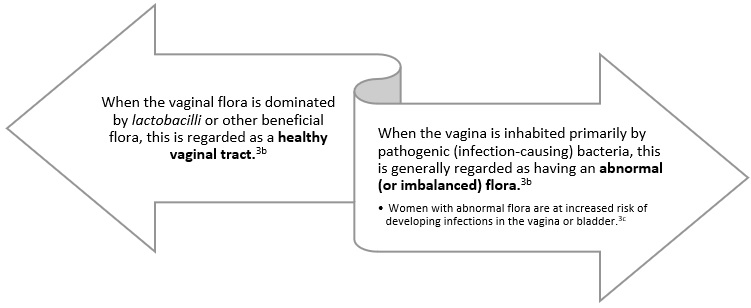
The microorganisms that inhabit the vagina play a major role in the maintenance of health of a woman.3
Probiotics help to restore and maintain a healthy vaginal flora and prevent genital infections such as thrush.3,4
Daily intake of selected probiotics can stabilise the fluctuating vaginal flora and lower the risk of infections in healthy women as well as those prone to urogenital infections.3
The benefits of probiotics are ‘species or strain-specific’
Probiotics have numerous health-promoting activities, however different probiotics can have different health effects.3 When choosing a probiotic, ensure it has proven effects in the condition(s) you are preventing or treating.5
Martinez RCR, et al. Improved cure of bacterial vaginosis with single dose of tinidazole (2 g), Lactobacillus rhamnosus GR-1 and Lactobacillus reuteri RC-14: a randomised, double-blind, placebo-controlled trial. Can J Microbiol 2009;55:133-138.
Reid G, Charbonneau D, Erb J, et al. Oral use of Lactobacillus rhamnosus GR-1 and L. fermentum RC-14 significantly alters vaginal flora: randomized, placebo-controlled trial in 64 healthy women. FEMS Immunology and Medical Microbiology 2003:35:131-134.
Reuterina femme® Approved Package Insert, December 2009.
Gardiner GE, Heinemann C, Bruce AW, et al. Persistence of Lactobacillus fermentum RC-14 and Lactobacillus rhamnosus GR-1 but Not L. rhamnosus GG in the Human Vagina as Demonstrated by Randomly Amplified Polymorphic DNA. CLIN. DIAGN. LAB. IMMUNOL. 2002;9(1):92–96.066 ZA Reut 112020