Bipolar

A man viewing the world through a bipolar disorder (BD) cutout
WhatsApp
Email

WHAT IS BIPOLAR DISORDER (also known as BD)?

In essence, it is a severe lifelong mood disorder causing alternating episodes of “highs” [elevated mood or mania] and “lows” [depressed mood]. 1, 2
Furthermore, there are two types of Bipolar disorder. Bipolar 1 disorder affects men and women equally, while bipolar 2 is more common in women. 2

BIPOLAR 1 DISORDER: One or more episodes of mania with or without major depressive episodes. 2, 3
BIPOLAR 2 DISORDER: One or more episodes of hypomania (less elevated mood) as well as at least one major depressive episode. 2, 3  It also presents with shorter bouts of depression than bipolar 1. 4
Additionally, anxiety, substance use/dependence, and personality disorders are common to both. 4
Back to top

SYMPTOMS OF “HIGHS” (MANIA)
  • An elevated or irritable mood which is often cheerful and joking but is unstable. There can also be extreme irritability and hostility
  • Overabundant energy and activity and rapid, pressured speech
  • A rush of ideas
  • Impulsive and inappropriate behaviour
  • Grandiose delusions (e.g. delusions of inventive genius or aristocratic birth)
  • Overoptimistic about one’s abilities
  • Severe insomnia
Back to top

SYMPTOMS OF “LOWS”
  • Depressed mood
  • Lack of interest or pleasure
  • Change in appetite
  • Insomnia/hypersomnia
  • Excessive guilt feelings
  • Ideas or acts of self-harm or suicide
  • Reduced self-esteem and self-confidence
  • Reduced concentration and attention
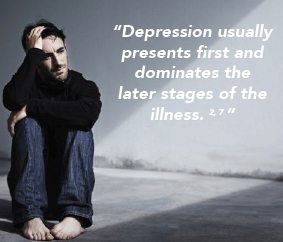
Mania is probably the most well-recognised feature of BPD. Even so, most people spend far more time in depressive episodes than in elevated and mixed mood episodes. 6


A depressed man sitting on the floor, possibly suffering from Bipolar Disorder
Back to top

PHASES OF BIPOLAR DISORDER

WHO DOES BIPOLAR DISORDER AFFECT?

The first symptoms of BD often present at 15 to 19 years of age. 2 There is often a family history of bipolar disorder, bullying at school and attempts of suicide/self-harm. 5
MEN 7

  • Early onset bd is often associated with manic episodes
  • Higher probability of childhood antisocial behaviour
  • Higher rates of comorbid alcohol abuse/dependence
  • Cannabis abuse/dependence
  • Pathological gambling


WOMEN 7

  • More depressive episodes
  • Higher rates of comorbid eating disorders
  • Weight change
  • Insomnia
Back to top

HOW DOES IT IMPACT QUALITY OF LIFE?

Bipolar disorder impacts quality of life in the following ways:

  • Affects work functioning and is responsible for loss of productivity and increased illness and absenteeism. In fact, 72% of bipolar patients receive disability payments.1
  • BD is associated with increased substance use/dependence and the excessive use of alcohol and smoking. 1, 5
  • It Increases the likelihood of having other psychiatric and medical conditions. 1
  • It Increases the risk of suicide, especially during major depressive episodes. 8
Back to top

CAN SPECIALISTS TREAT BIPOLAR DISORDER?

Yes, Effective treatment is certainly available for BD. However, despite advances in medical and non-medical treatments, BD often has many relapses and affects psychological functioning. 7
Long-term treatment is aimed at preventing manic and depressive episodes. Specialists strongly recommend Long-term treatment because even after one episode, the chances of having recurrences in a lifetime is 95%. 6 Therefore, treatment of BD is often lifelong, and treatment specialists need to review the condition at least every six months. 2

Back to top

Related Brochures

Bipolar
anxiety-disorder
Causes, diagnosis and treatment for general ....
Bipolar
obsessive-compulsive-disorder-ocd
Have you ever heard someone casually refer to themselves as OCD because they like to do things in a precise and ....
Bipolar
schizophrenia
Schizophrenia is a severe, complex and debilitating mental illness that affects many aspects of everyday ....